Securing Sacred Grounds: Tyre Killers, Anti-Drone Tech, and Advanced Devices at the Ram Mandir Inauguration Ceremony

Securing Sacred Grounds: Tyre Killers, Anti-Drone Tech, and Advanced Devices at the Ram Mandir Inauguration Ceremony
In a groundbreaking move, the Uttar Pradesh Police is set to make history by becoming the first state police force in India to deploy state-of-the-art anti-drone technology. This innovative measure will be implemented during the upcoming consecration ceremony of the Ram temple, underscoring the commitment to ensuring heightened security for the auspicious event.
An officer from the Anti-Terrorism Squad (ATS) provided insights into the advanced capabilities of the anti-drone systems. According to the officer, these cutting-edge systems are designed to detect and intercept unwanted drones through a variety of sophisticated methods. One key feature involves scanning for specific radio frequencies, enabling the identification and neutralization of drones attempting to compromise the security of the ceremony.
Moreover, the anti-drone technology goes a step further by utilizing advanced command protocol recognition, allowing it to identify individual drone models. This capability ensures a comprehensive approach to neutralizing potential threats by pinpointing the exact nature of the drone in question.
The officer emphasized that the anti-drone systems are equipped with electro-optical and infrared sensors, enabling detection based on visual and heat signatures. This dual-sensor approach enhances the accuracy and reliability of the system, providing comprehensive coverage against a wide range of drone threats.
The deployment of anti-drone technology by the Uttar Pradesh Police showcases a proactive approach to security challenges, particularly in the context of high-profile events such as the consecration ceremony of the Ram temple. As the nation eagerly anticipates this historic occasion, the integration of cutting-edge security measures reaffirms the commitment to ensuring the safety and sanctity of the proceedings.
This development positions Uttar Pradesh as a pioneer in the adoption of anti-drone technology within the law enforcement sector, setting a precedent for other states across India. As technology continues to play a crucial role in modern security strategies, the implementation of such advanced measures underscores the importance of staying ahead of evolving threats to safeguard public events of national significance.
Hi-tech CCTV cameras
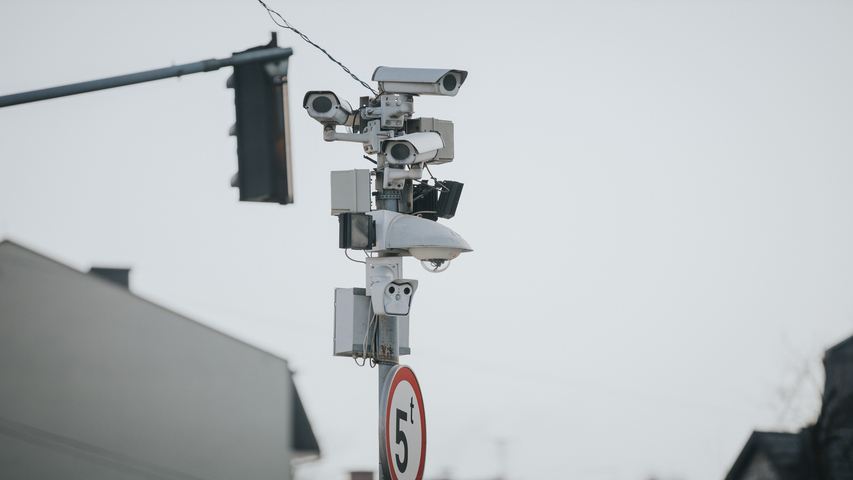
Comprehensive CCTV surveillance has been implemented, featuring central command control centers strategically positioned in designated yellow and red zones. These command hubs serve as repositories for footage captured by an extensive network of cameras spread across the city. The system boasts an impressive 90-day recording capacity, ensuring a robust and reliable archive of surveillance data.
25 telescopes and counting

The government has reportedly acquired 25 telescopes created by Raghunath Manohar, Deputy Engineer at the Advanced Material Research Laboratory of Manipal Institute of Technology. As per media sources, these telescopes are equipped with a sophisticated optical system comprising nine lenses. The erecting lens system utilizes nine biconvex lenses with identical focal lengths and dimensions of 10 cm and 50 mm, respectively. The apparatus incorporates eight PVC tubes of the appropriate dimensions, which are inserted into a slightly larger PVC container pipe featuring a collar at one end and a central hole for image viewing.
To facilitate focusing and enhance clarity when observing distant objects, the housing tube is equipped with external screw threads. The container tube serves the dual purpose of an erecting eyepiece and a compound microscope. This innovative design aims to provide an effective and versatile tool for astronomical and microscopic observations.
Smart Traffic Control System
?The implementation of the Intelligent Traffic Management System (ITMS) project in Ayodhya is set to enhance the safety and efficiency of travel for visitors, ensuring a seamless traffic flow. This initiative will cover 20 key locations across Ayodhya, including areas like Riqabganj, Civil Line, Hanuman Cave, Shri Ram Hospital, Naya Ghat, Saket Petrol Pump, Devkali Bypass, Sultanpur Bypass, Rae Bareli Bypass, Sahadatganj Bypass, Guru Gobind Singh Square, Police Line, Tedhi Bazaar, Udaya Square, Devkali Tiraha, Gudri Bazaar, Post Office Square, Naka Tiraha, Guru Gobind Singh, Sahadatganj Hanumangarhi Square, and DM Square.
To ensure swift response and assistance during emergencies, the district administration has strategically installed emergency call boxes at these 20 locations. These call boxes serve as a vital communication link, transmitting crucial information to the central control room. This proactive approach aims to provide timely and valuable assistance in emergency situations, further reinforcing the overall effectiveness of the Intelligent Traffic Management System.
NO COMMENTS YET
Be the first to comment on this news